Is Dental Work in Vietnam Safe for Americans? A 2026 Guide
At accredited dental clinics in Vietnam using internationally certified equipment (Straumann, Nobel Biocare, Ivoclar) and trained specialists, dental work is safe and clinically comparable to procedures performed in the US. The safety question in Vietnam is less about the country and more about the specific clinic - the gap between a vetted specialist clinic and an unvetted low-cost provider is significant. Know what to verify before you book.
Key Takeaways
- ✅ Vetted dental clinics in Vietnam use Tier 1 implant and ceramic systems identical to top US practices
- ✅ Vietnamese dentists at specialist clinics commonly hold postgraduate training from the US, France, Australia, Japan, or South Korea
- ✅ Sterilization standards at accredited clinics follow ISO 13485 medical device protocols
- ✅ The safety risk concentrates at non-vetted, unusually low-price clinics - not at the country level
- ✅ Key verification steps: implant brand, digital equipment, dentist credentials, patient reviews
- ✅ Complications occur at a similar rate to the US at tier-1 clinics; higher at non-vetted providers
The Honest Version of "Is It Safe?"
The question most Americans really mean when they ask this is: "Will I get the same quality of care I'd get at home?"
The answer to that depends entirely on which clinic you walk into.
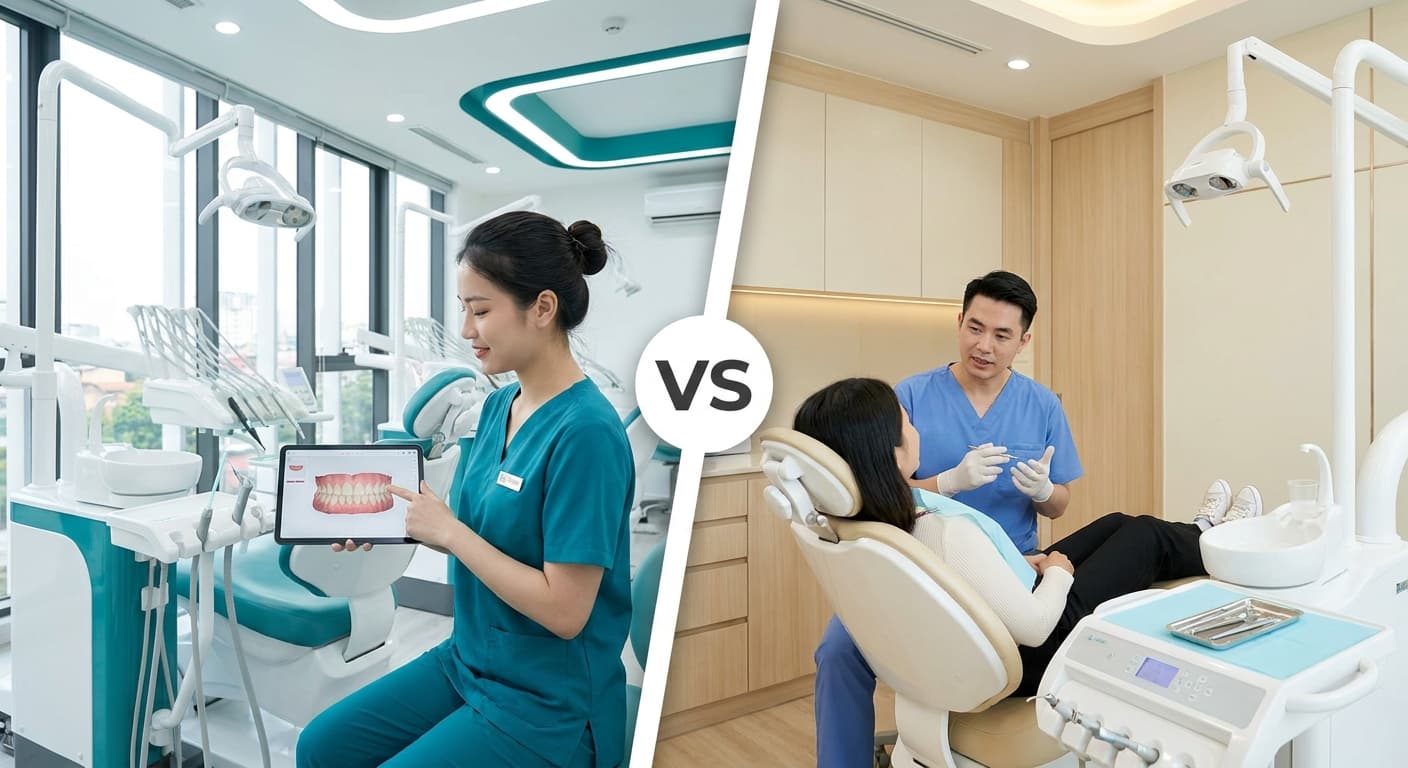
Vietnam is not a monolith. HCMC alone has hundreds of dental practices ranging from world-class specialist centers with in-house CT scanning and CAD/CAM labs, to street-level general dentists with outdated equipment. The safety question is a clinic selection question - not a country question.
This guide tells you exactly what to look for.
What Makes a Dental Clinic Safe? The 6 Things That Matter
1. Implant System Brand
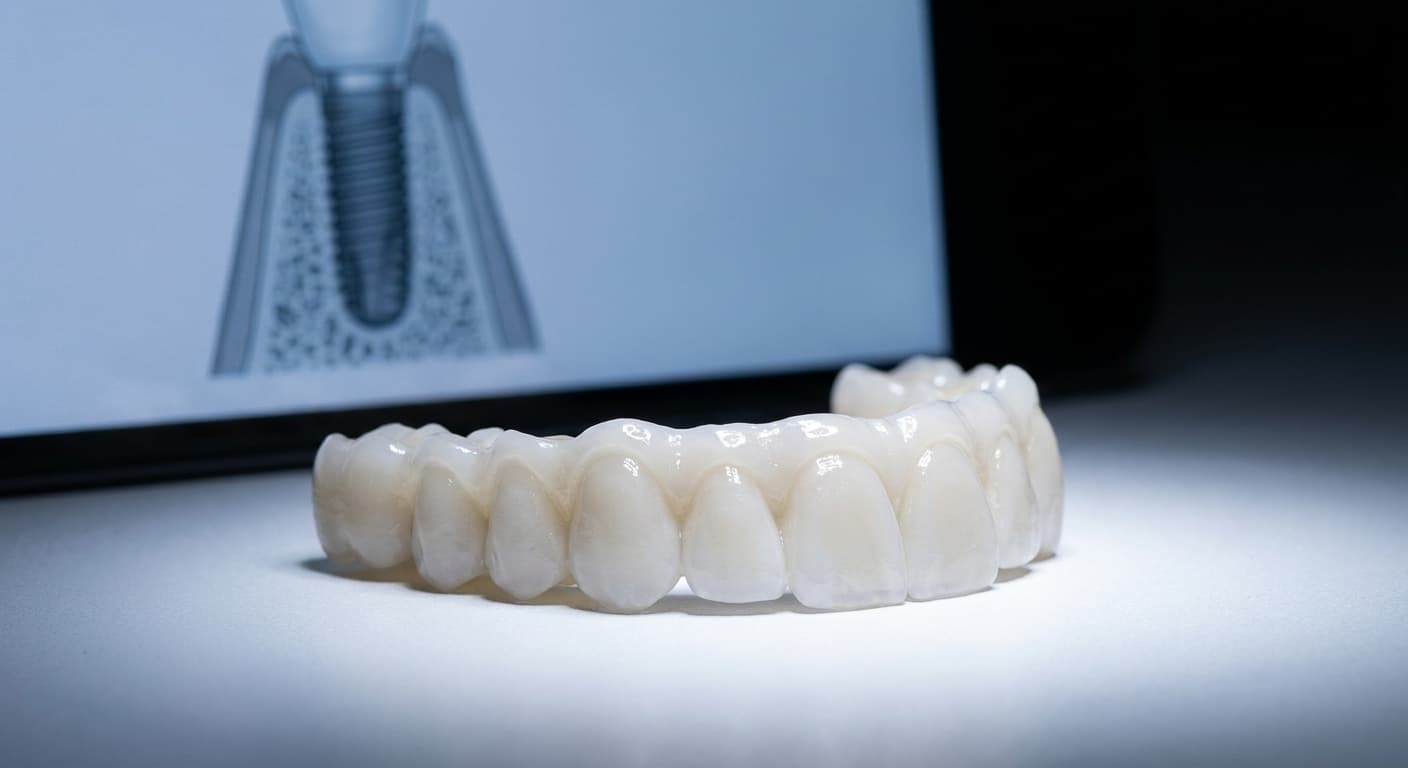
For implant procedures, the single most important quality indicator is the implant brand. The global tier-1 systems - Straumann (Switzerland), Nobel Biocare (Sweden), Zimmer Biomet (US) - have 30+ years of clinical research, globally standardized production, and the broadest compatibility with prosthetic components worldwide.
A clinic using Straumann BLX or Nobel Biocare is using the same implant system employed by the best oral surgeons in New York, Los Angeles, and Chicago. The implant material is literally the same product.
Ask directly: "Which implant brand do you use?" A reputable clinic answers immediately and specifically. A vague answer ("we use European implants") warrants follow-up.
Red flag: Unusually low prices often indicate Tier 3 implant systems with limited clinical data and no global service network. A single Straumann implant in Vietnam costs approximately $1,100–$1,700. A quote of $400–$600 for a "complete implant" is using a different product.
2. Digital Imaging Equipment
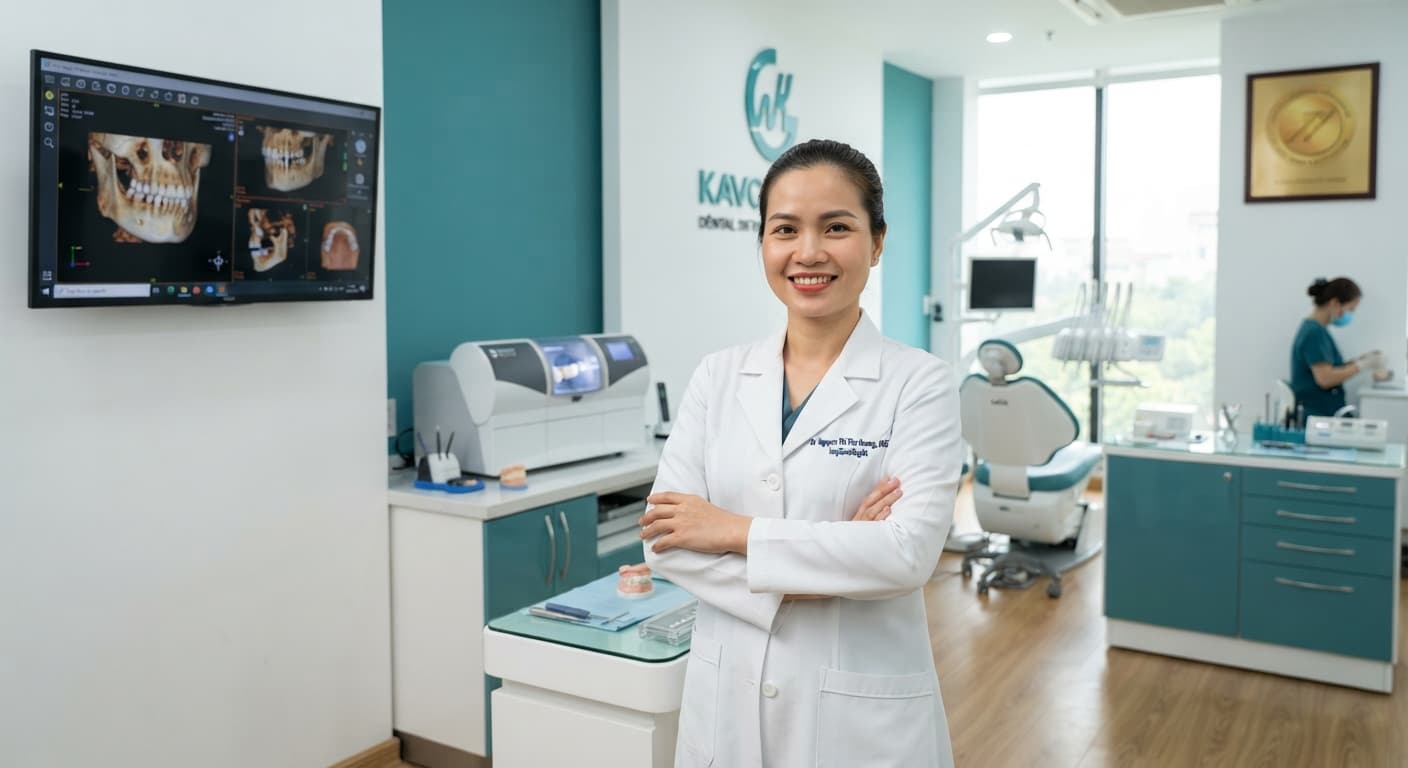
Safe implant placement requires precise pre-surgical planning. The standard of care is a 3D cone beam CT (CBCT) scan, which maps bone density, nerve locations, and sinus anatomy in three dimensions. Placing implants without a 3D scan is like doing surgery without imaging - technically possible but not the standard of care.
Top Vietnam dental clinics use the same CT and intraoral scanning systems as US practices: Carestream, Planmeca, Sirona. Ask if your consultation includes a 3D CT scan. If a clinic plans your implant from a 2D X-ray only, that's insufficient.
3. CAD/CAM Lab Capability
The quality of your crown, veneer, or arch bridge depends on the precision of fabrication. In-house CAD/CAM milling (Cerec, Zirkonzahn, or equivalent) allows same-day or next-day precision restorations from digital impressions - eliminating the variability of an external lab.
At minimum, ask: "Do you use in-house CAD/CAM or an external lab?" Both are acceptable if the lab is reputable - but in-house gives you more control over timelines and quality checkpoints.
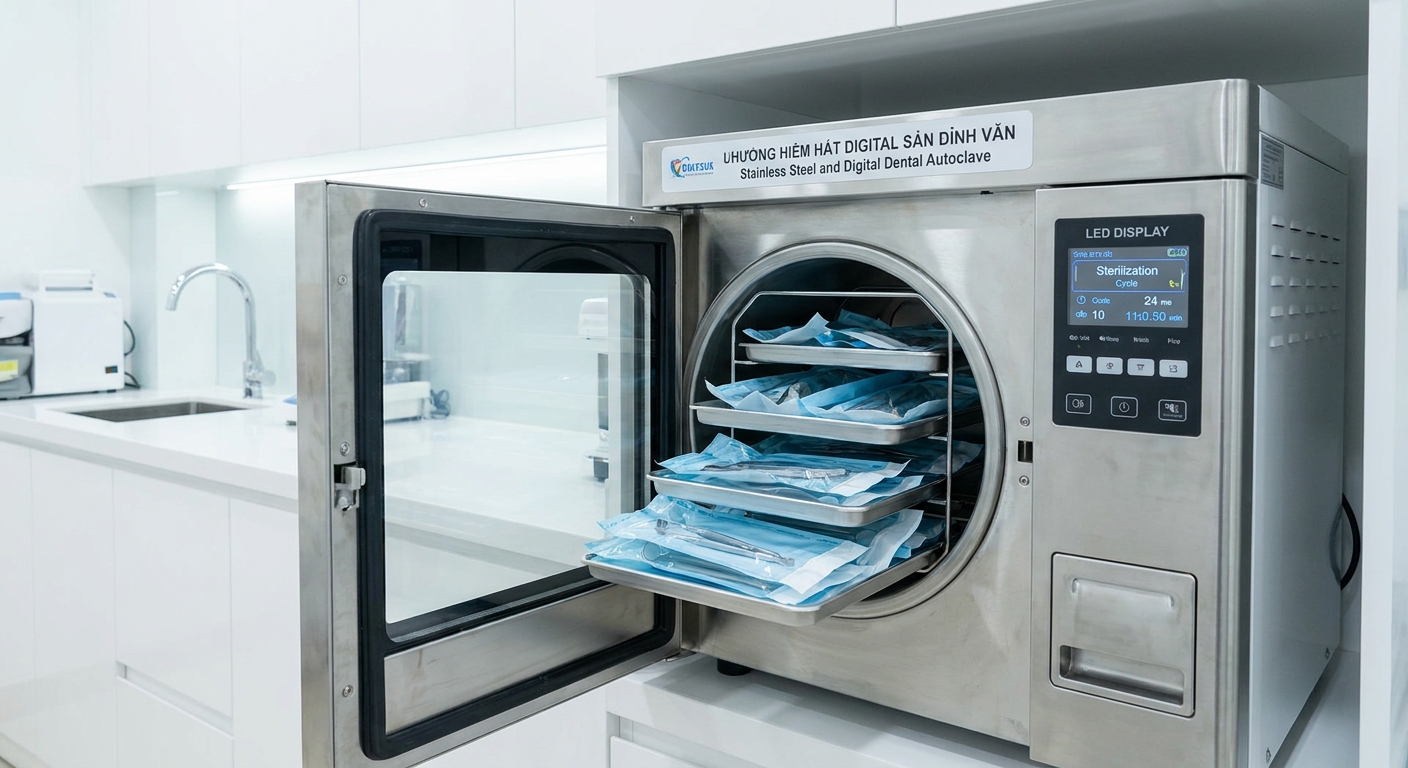
4. Sterilization Protocols
Proper sterilization is non-negotiable. Standard protocols at reputable clinics include: autoclave sterilization of all instruments at 134°C/273°F, single-use disposables for all consumables that contact blood or saliva, and documented sterilization records.
You can ask to see the sterilization area or request a brief clinic tour before committing. A confident, quality-focused clinic welcomes this. A clinic that deflects the question gives you your answer.
5. Dentist Credentials
The surgeon placing your implants or designing your veneers should have postgraduate specialist training, not just a general dental degree. In Vietnam, dentists at top private clinics commonly trained at:
- Université Paris Diderot / Paris VII (France) - common for HCMC's older specialist generation
- University of Queensland / Sydney (Australia)
- Seoul National University / Yonsei University (South Korea)
- Specific implantology certifications: ITI (International Team for Implantology) or ICOI (International Congress of Oral Implantologists)
Ask: "Where did the treating dentist complete their postgraduate training?" This is standard pre-procedure information, and a transparent clinic provides it.
6. Verifiable Patient Reviews
English-language patient reviews on Google Maps, WhatClinic, and Yelp give you data points from patients with comparable profiles to yours - including American, British, and Australian patients who have completed procedures.
Look for: consistent mentions of specific dentist names (indicating stable team), before/after photos, mentions of specific procedure types similar to yours, and response patterns from the clinic to negative reviews (how they handle problems is as important as whether problems occur).
Vietnam Dental Clinics vs US Dental Practices: A Direct Comparison
| Factor | US Top Cosmetic Practice | Vietnam Top Specialist Clinic |
|---|---|---|
| Implant brands | Straumann, Nobel, Zimmer | Straumann, Nobel, Zimmer ✅ |
| Ceramic systems | Ivoclar, GC Initial | Ivoclar, GC Initial ✅ |
| 3D CBCT scanning | Standard | Standard at top clinics ✅ |
| CAD/CAM in-house | Common | Available at top clinics ✅ |
| Dentist training | US dental school + residency | Overseas postgraduate + specialist certs ✅ |
| English communication | Native | Strong at top clinics / coordinators ⚠️ |
| Cost per implant | $3,000–$5,000 | $1,100–$1,700 ✅ |
| Implant failure rate (Tier 1) | 2–5% lifetime | 2–5% lifetime ✅ |
| Malpractice framework | Well-established | Established & regulated by Civil Code ✅ |
| Aftercare access | Local follow-up | Remote follow-up via coordinator ⚠️ |
The clinical picture at Tier 1 Vietnam clinics is genuinely comparable to top US practices. The infrastructure differences (such as local aftercare access) are real - but manageable with proper coordination and documentation.
The 4 Specific Risks - and How to Mitigate Each
Risk 1: Wrong clinic selection
The most common cause of negative dental experiences abroad.
Mitigation: Use a vetted referral service like Meditrips that pre-screens clinics against specific equipment and credential standards. Don't book based solely on price or website aesthetics.
Risk 2: Language gaps during complex consultations
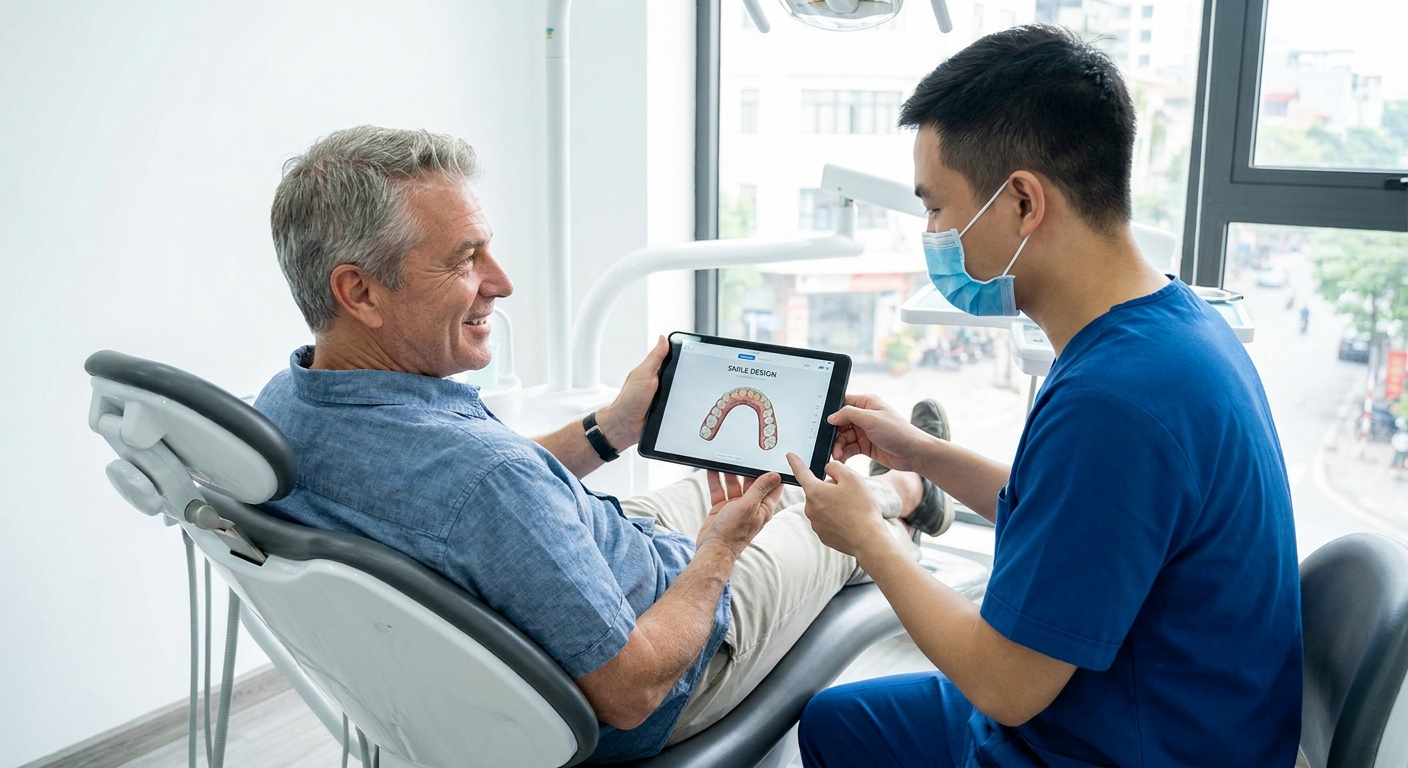
Medical translation errors in dentistry can mean a crown when you expected a veneer, or implant placement in the wrong position because anatomy wasn't communicated accurately.
Mitigation: Use a professional medical interpreter - not a friend or hotel staff member - for any procedure beyond a simple cleaning. Meditrips provides certified medical interpreters for all patient appointments.
Risk 3: Aftercare gaps after returning to the US
Implants integrate over 3–6 months. Questions arise. Communication with a Vietnamese clinic from the US can be slow or fall through without proper channels.
Mitigation: Get complete written aftercare instructions in English before you leave Vietnam. Carry your implant passport. Ensure your US dentist has received your full treatment record. Meditrips maintains communication channels between patients and treating clinics for the duration of the osseointegration period.
Risk 4: Undetected complications before departure
Swelling and discomfort after oral surgery are normal. But infections, improper bite alignment, or implant instability can begin showing signs in the first week - while you're still in Vietnam.
Mitigation: Don't schedule your departure flight for the day after surgery. Build in at least 5 days of post-procedure time before flying. Attend all follow-up appointments scheduled by your clinic before departure.
What the Data Says About Dental Tourism Safety
The academic literature on dental tourism safety is consistent: outcomes at internationally accredited facilities are comparable to domestic care in the patient's home country. Negative outcomes concentrate in the non-vetted, low-cost segment.
A 2023 review published in the International Journal of Environmental Research and Public Health found that patients who used verified coordination services for dental tourism reported complication rates and satisfaction scores comparable to domestic dental care - while saving an average of 65–72% on total procedure costs.
The key variable isn't the country. It's the care selection process.
A Practical Safety Checklist Before You Book
Use this before committing to any clinic:
- Ask for the specific implant brand (Straumann, Nobel, Zimmer = Tier 1)
- Confirm 3D cone beam CT scan is included in the treatment plan
- Ask where the treating dentist completed postgraduate training
- Ask whether the lab is in-house or external
- Read English-language Google Maps and WhatClinic reviews
- Confirm a post-procedure follow-up appointment is scheduled before departure
- Ensure you'll receive written aftercare instructions and implant passport in English
- Verify the clinic has a clear process for post-procedure questions from abroad
If a clinic can't or won't answer these questions clearly, look elsewhere. Quality clinics are transparent about these details because they're proud of them.
FAQ
Q: Are dental X-rays in Vietnam safe? Modern digital dental X-rays - used at all top clinics in Vietnam - emit extremely low radiation doses, comparable to receiving a few hours of background radiation from the environment. Cone beam CT scans use more radiation but remain within internationally accepted diagnostic guidelines. The clinical benefit of accurate imaging far outweighs the minimal radiation exposure.
Q: What if I have an allergic reaction to anesthesia in Vietnam? Reputable dental clinics maintain emergency protocols for anesthetic reactions, including oxygen, epinephrine, and trained staff. Before any procedure, your treating dentist takes a complete medical history including known allergies and current medications. Disclose everything, including supplements and over-the-counter medications.
Q: Can I trust Vietnamese dental materials not to contain harmful substances? At clinics using branded Tier 1 materials (Straumann implants, Ivoclar ceramics), the materials are manufactured under ISO certification in Switzerland and Liechtenstein respectively - the same products sold globally. Lower-tier materials from unverified sources carry more uncertainty. This is one more reason the implant and ceramic brand question matters.
Q: Is the pain management during procedures adequate? Local anesthesia protocols at top Vietnamese dental clinics are equivalent to US practice. IV sedation (twilight sedation) is available at most specialist implant centers for patients who prefer it, at an additional cost of $300–$600. If anxiety around dental procedures is a factor, discuss this explicitly with your clinic and coordinator before your trip.
Q: How do I handle a dental emergency after returning to the US? Contact your US dentist immediately and present your complete treatment documentation from Vietnam. Also contact Meditrips - we can facilitate direct communication between your US dentist and your treating clinic in Vietnam to ensure accurate information transfer and coordinated care.
How Meditrips Ensures Your Safety
Meditrips doesn't refer patients to every dental clinic in Vietnam - only to practices that meet specific criteria: Tier 1 implant systems, documented equipment standards, verifiable dentist credentials, and English-language communication capability.
We do pre-trip assessments, attend consultations with patients, coordinate post-procedure follow-up, and maintain direct communication channels with every clinic in our network.
If you want to know whether a specific clinic you've found online meets these standards, we'll tell you directly - and we'll suggest an alternative if it doesn't.
→ Request a Free Consultation at meditrips.net/contact
Internal Links: → All-on-4 Implants Cost Vietnam | → How Long to Stay in Vietnam for Dental Work | → Vietnam vs Thailand Dental Work External Sources: International Team for Implantology (ITI) | Straumann Group clinical data | International Journal of Environmental Research and Public Health (2023)
About the Author
Meditrips Editorial Team
Ready to Get a Free Quote?
Tell us your procedure. We'll send itemized pricing from 2–3 JCI hospitals within 24 hours.
Talk to a Care Coordinator →