All-on-4 Dental Implants in Vietnam: Complete 2026 Cost Guide for Americans
Short answer:
All-on-4 dental implants in Vietnam cost $5,000–$10,000 per arch (upper or lower jaw), compared to $20,000–$40,000 per arch in the United States. The procedure involves four titanium implants supporting a full arch of 12–14 prosthetic teeth, completed in one trip of 10–14 days. Top clinics in Ho Chi Minh City use Straumann and Nobel Biocare implants - the same tier-1 systems used by leading US implant dentists.
Key Takeaways
- ✅ All-on-4 Vietnam: $5,000–$10,000 per arch (vs $20,000–$40,000 in the US)
- ✅ Full-mouth (both arches): $10,000–$18,000 in Vietnam vs $40,000–$80,000 in the US
- ✅ Implant brands used: Straumann, Nobel Biocare, Zimmer Biomet - identical to US top clinics
- ✅ Treatment completed in one trip: 10–14 days
- ✅ Savings on full-mouth All-on-4: $30,000–$60,000 compared to US pricing
What Is All-on-4 and Who Is It For?
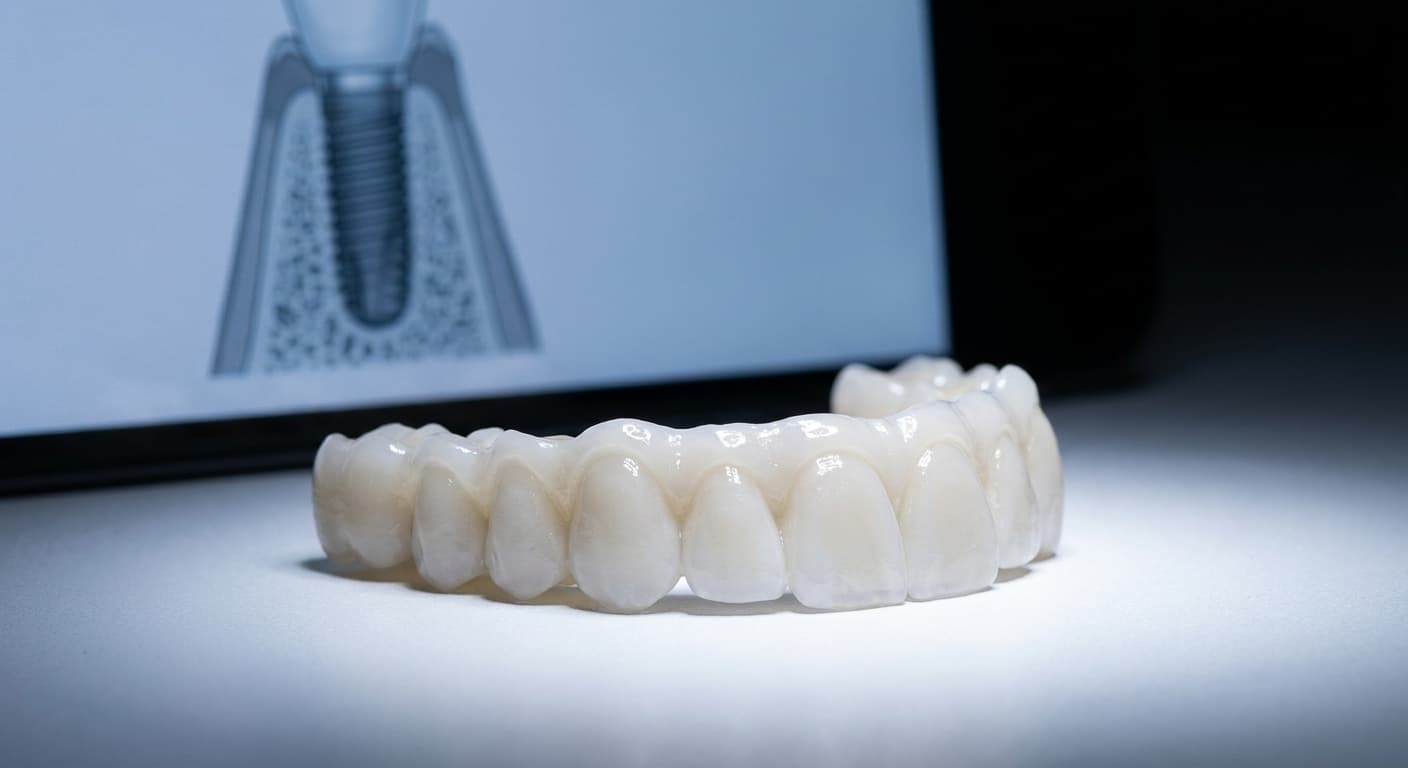
All-on-4 is a full-arch dental implant technique developed by Nobel Biocare. Four titanium implants are strategically placed in the jawbone - two straight in the front, two angled at the back - and a fixed bridge of 12–14 prosthetic teeth is attached on the same day as surgery.
The result: a complete set of fixed, non-removable teeth in a single treatment sequence.
All-on-4 is typically recommended for:
- Adults who have lost most or all teeth in one or both arches
- Patients with failing teeth requiring full extraction
- Long-term denture wearers wanting a permanent, non-removable solution
- Patients who've been told they lack sufficient bone for individual implants (the angled placement maximizes existing bone volume)
It is not recommended for:
- Patients who smoke heavily (significantly increases implant failure risk)
- Uncontrolled diabetics (affects healing)
- Patients with active gum disease requiring treatment before implant surgery
Full Cost Breakdown: What's Included in Vietnam's All-on-4 Price
The quoted price for All-on-4 in Vietnam varies because clinics structure their packages differently. Here's what a complete All-on-4 package at a reputable HCMC clinic should include:
Included in a comprehensive package:
- Initial consultation and full oral examination
- 3D cone beam CT scan (essential for surgical planning)
- Digital smile design and treatment planning
- All extractions (if remaining teeth need to be removed)
- Implant placement surgery (4 implants per arch)
- Anesthesia (local; IV sedation available at additional cost)
- Temporary acrylic arch fitted same day as surgery
- Post-operative care and follow-up appointments
- Permanent porcelain-fused-to-zirconia (PFZ) arch fabrication
- Final delivery and fitting of permanent arch
- 1-year implant warranty (most reputable clinics)
- Post-procedure care kit
Sometimes charged separately - always confirm upfront:
- Bone grafting (if required - adds $500–$2,000 depending on volume needed)
- Sinus lift (for upper arch patients with low sinus floor - adds $800–$2,500)
- IV sedation (adds $300–$600 per session)
- Extended warranty (beyond 1 year - available at premium)
The transparency of the initial quote is itself a quality signal. A reputable clinic itemizes everything. A clinic that gives you a single lump-sum number without detail warrants more questions.
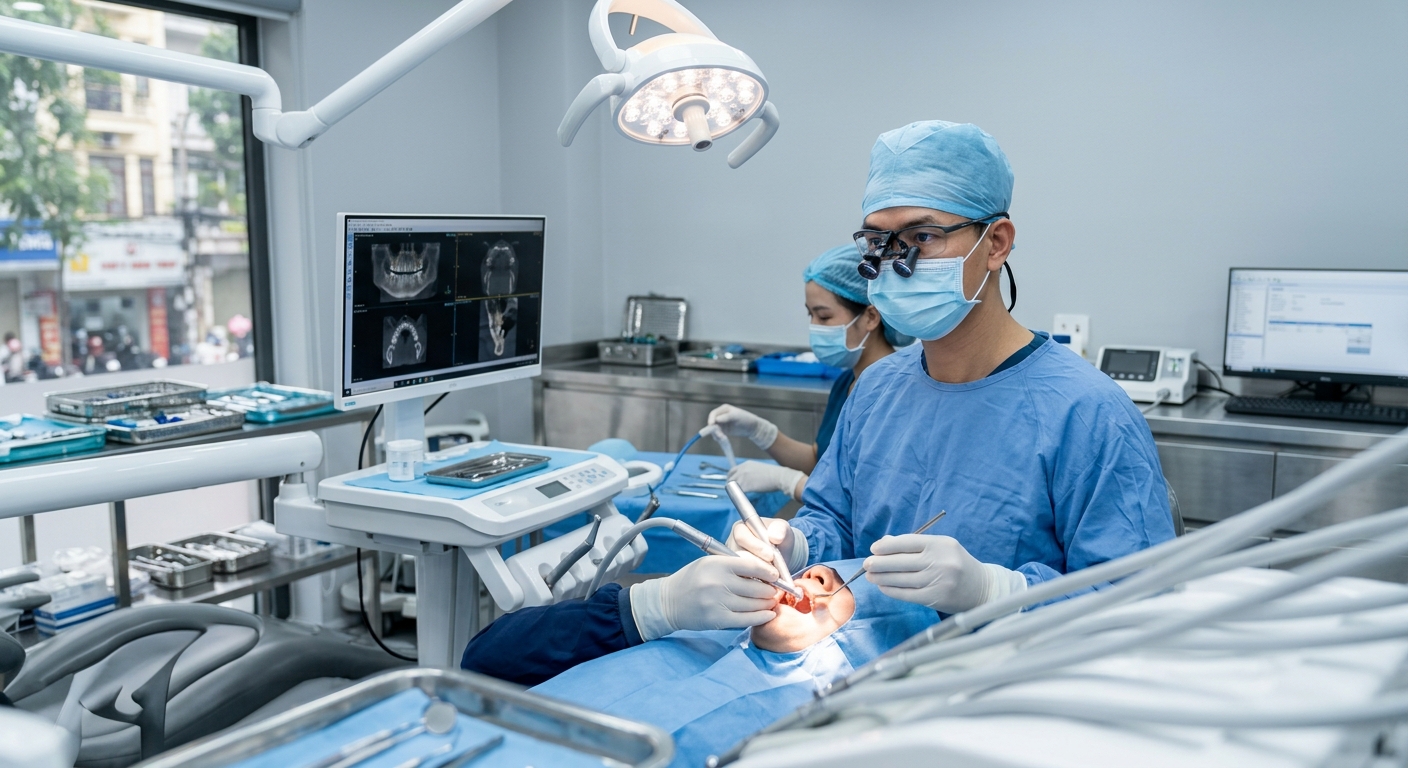
Price by Implant Brand: Tier 1 vs Tier 2
The biggest cost variable in All-on-4 is the implant brand. Vietnam's top clinics offer multiple tiers:
| Implant Brand | Origin | Per-Arch Price (Vietnam) | Quality Tier |
|---|---|---|---|
| Straumann BLT/BLX | Switzerland | $8,000–$10,000 | Tier 1 (World's #1 implant brand) |
| Nobel Biocare All-on-4 | Sweden | $7,500–$9,500 | Tier 1 (Original All-on-4 system) |
| Zimmer Biomet | USA | $7,000–$9,000 | Tier 1 |
| Megagen | South Korea | $5,500–$7,500 | Tier 2 (Clinically strong, less global track record) |
| Biotem / Dio | South Korea | $5,000–$6,500 | Tier 2 |
Recommendation: For a permanent full-arch restoration that needs to last 15–25+ years, using a Tier 1 system (Straumann, Nobel, or Zimmer) is worth the additional cost.
The difference in cost between a Tier 1 and Tier 2 system in Vietnam ($2,000–$3,500 per arch) is small relative to the total savings versus US pricing. It makes sense to optimize here.
All-on-4 Cost Comparison: Vietnam vs Global Alternatives
| Country | All-on-4 Per Arch | Full Mouth (2 arches) | Notes |
|---|---|---|---|
| United States | $20,000–$40,000 | $40,000–$80,000 | Significant variation by city |
| Vietnam | $5,000–$10,000 | $10,000–$18,000 | Tier 1 implants available |
| Thailand | $8,000–$14,000 | $16,000–$26,000 | Strong quality, less value than VN |
| Mexico | $6,000–$12,000 | $12,000–$22,000 | Geographic convenience for US SW |
| Costa Rica | $7,000–$12,000 | $14,000–$22,000 | Smaller specialist pool |
| Turkey | $4,000–$8,000 | $8,000–$14,000 | Lowest cost; variable quality |
Vietnam's position: best combination of Tier 1 implant availability + cost savings + travel experience. Turkey is cheaper on paper but the quality variance at lower-priced clinics is higher risk for a permanent full-arch procedure.
The All-on-4 Procedure in Vietnam: Step by Step
Before the Trip
Your coordinator arranges a pre-consultation video call with your treating dentist in Vietnam. You share existing X-rays, dental records, and photos. The dentist assesses your suitability for All-on-4, identifies whether bone grafting or sinus lift will be needed, and provides a precise cost quote.
This step is critical - and it's why same-day online quotes from dental tourism websites are unreliable. Your specific bone density, gum health, and bite anatomy all affect the treatment plan.
Day 1: Arrival and Rest
Fly in the day before your first appointment. After 20+ hours of travel, your body and mind need recovery time before going into any procedure. Most coordinators recommend checking in at a comfortable hotel near the clinic and spending the first day resting.
Day 2: Full Assessment
- 3D cone beam CT scan
- Intraoral scanning and digital smile design
- Final treatment planning with your surgeon
- Pre-operative blood work
- Anesthesia consultation
At this appointment you'll see a digital preview of your result - the arch design, tooth shape, and color are all finalized before surgery.
Day 3: Surgery Day
All-on-4 surgery typically takes 3–5 hours per arch under local anesthesia.
- Remaining teeth extracted (if applicable)
- Implant sites prepared
- Four implants placed (two straight, two angled)
- Temporary arch attached to implants same day
You leave the surgery with a full set of fixed teeth the same day as implant placement. The temporary arch looks good and functions for eating soft foods immediately.
Days 4–6: Recovery
Swelling, bruising, and some discomfort are normal for 3–5 days. Most patients manage well on over-the-counter pain relief.
- Quiet hotel environment
- Soft food restaurant recommendations nearby
- Post-op medication (antibiotics, anti-inflammatories)
- Daily check-in contact
Light activity is fine - gentle walks, quiet sightseeing. No vigorous activity, swimming, or alcohol for 5–7 days.
Days 7–9: Lab Work in Progress
The permanent porcelain-fused-to-zirconia arch is being fabricated in the lab. For patients with 10–14 day trips, this is the perfect window for a 2-night side trip to Hoi An, Da Nang, or Phu Quoc.
Day 10: Try-In Appointment
The permanent arch is tried in for fit, bite, and aesthetics. Minor adjustments are made. Color and shape are verified against the digital design approved on Day 2.
Day 11: Final Delivery
The permanent arch is attached and torqued to final specification. You receive your implant passport - documentation of implant brand, size, and placement details, essential for future dental care anywhere in the world.
Days 12–14: Buffer and Departure
Final check appointment. Patient education: cleaning protocol, foods to avoid in the first 3 months, follow-up schedule. Departure.

Why Is All-on-4 So Much Cheaper in Vietnam?
The cost difference isn't about corner-cutting. It reflects structural economic differences:
Labor costs: Dental specialist wages in Vietnam are significantly lower than in the US - not because Vietnamese dentists are less trained, but because the cost of living is lower. The same Straumann implant costs the clinic roughly the same price globally; the procedure cost is where the difference lives.
Overhead: A dental clinic in HCMC pays a fraction of what a US practice pays for rent, malpractice insurance, administrative staff, and regulatory compliance. These operational savings pass to the patient.
No insurance system friction: In the US, dental practices price procedures partly to navigate insurance negotiations and administrative overhead. Cash-pay in Vietnam eliminates this layer entirely.
Lab costs: Vietnam has high-quality domestic dental labs that produce zirconia and porcelain restorations at a fraction of US lab costs, while using the same material systems.
Honest Risks and How to Mitigate Them
Risk 1: Implant failure
All implants carry a small failure rate (2–5% lifetime for Tier 1 systems). The primary risk factors are patient-related: smoking, uncontrolled diabetes, poor oral hygiene. Choose a Tier 1 implant system and follow aftercare protocols.
Risk 2: Suboptimal fit on the permanent arch
The quality of the final restoration depends on the precision of the digital scan and the lab. Ask specifically whether the lab is in-house or external, and request to see examples of previous completed cases.
Risk 3: Complications after returning home
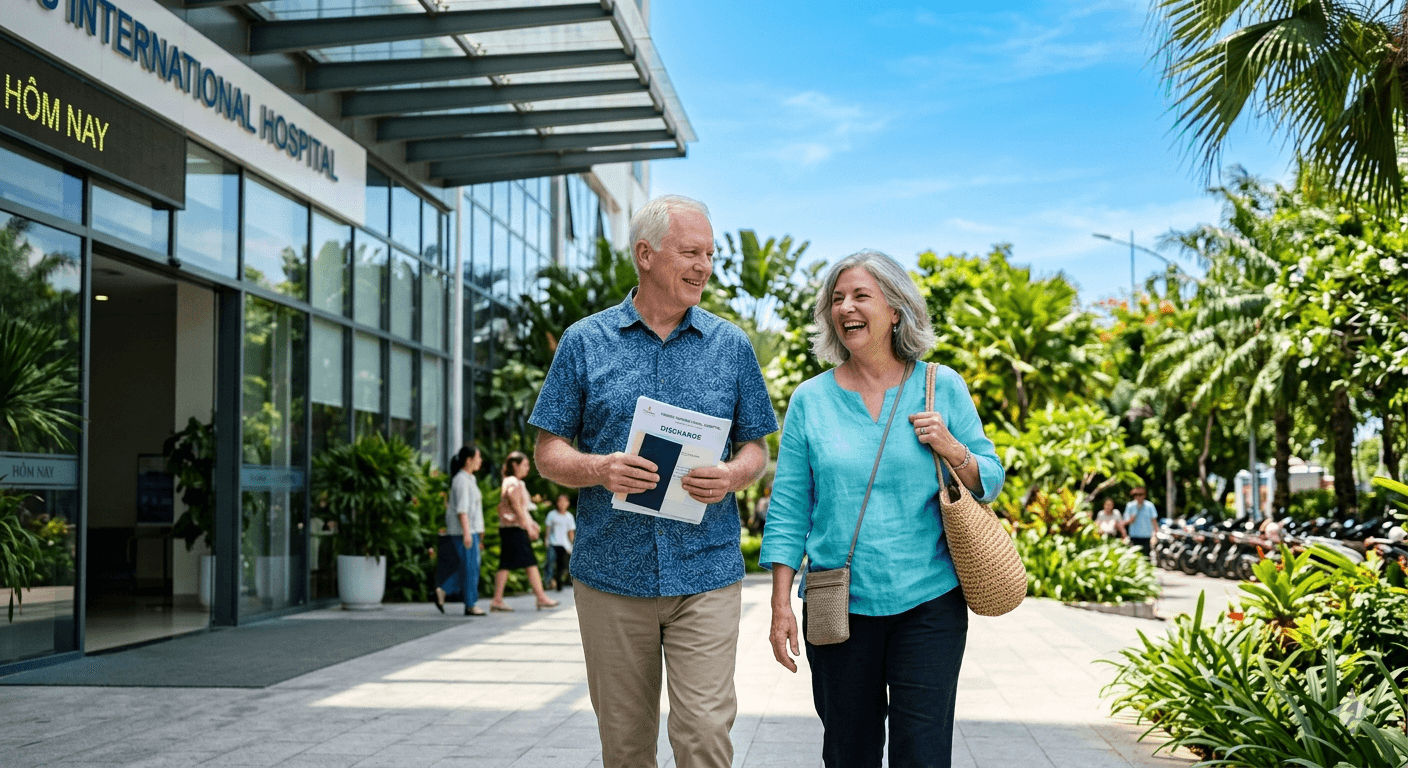
Carry your implant passport and complete discharge documentation. In the event of a complication, your US dentist needs this information to provide appropriate care. Meditrips facilitates communication between your US dentist and your treating clinic in Vietnam.
Risk 4: Hidden costs
Bone grafting and sinus lifts are the most common unexpected costs. A proper pre-consultation with CT scan assessment should identify these needs before surgery day. Get a written quote that addresses both scenarios: with and without additional procedures.
FAQ
Q: Is All-on-4 the right procedure for me?
All-on-4 is appropriate for patients with most or all teeth missing or failing in one or both arches, and adequate bone density at the implant sites. Individual implants or implant-supported bridges may be more appropriate for partial tooth loss. A proper consultation with CT scan assessment is the only way to determine the right approach for your specific anatomy.
Q: How long do All-on-4 implants last?
The titanium implants themselves are designed for lifetime function. The porcelain arch bridge typically lasts 10–20 years before replacement may be needed - similar to any dental bridge. Proper oral hygiene and regular professional maintenance are the key variables.
Q: Can I eat normally after All-on-4?
Within 3 months of surgery, you eat soft foods only - the implants are osseointegrating (fusing with bone). After 3 months, you can eat normally except very hard foods (ice, hard candy, extremely tough meats) that could damage any dental restoration, including natural teeth.
Q: What if I need a bone graft - does that affect the timeline?
Minor bone grafting done simultaneously with implant placement doesn't significantly extend the timeline. Major bone augmentation requiring a healing period before implant placement adds 3–6 months to the overall treatment.
Q: Does Vietnam have All-on-6 or All-on-8?
Yes. All-on-6 (6 implants per arch) and All-on-8 (8 implants per arch) are available at top clinics and provide additional stability for patients with higher bite force requirements or specific bone anatomy. Pricing scales accordingly - add approximately $1,000–$1,500 per additional implant.
About the Author
Meditrips Editorial Team
Medical tourism specialists helping Americans navigate dental implant care in Vietnam.
Ready to Get a Free Quote?
Tell us your procedure. We'll send itemized pricing from 2–3 JCI hospitals within 24 hours.
Talk to a Care Coordinator →